
The Deep Symbolism Behind Mandala Art: What Each Pattern Means for Your Home
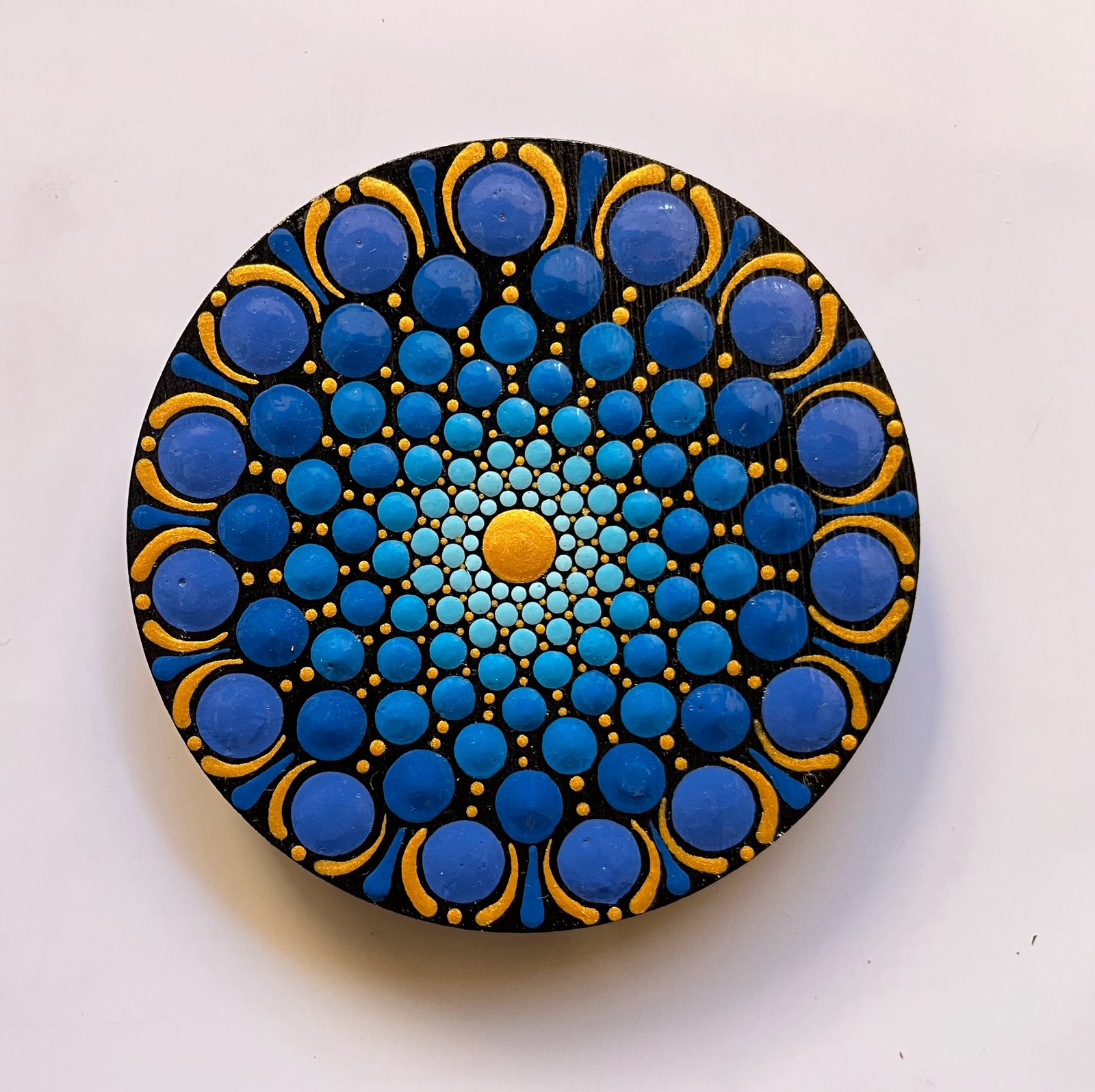
A mandala is never just decoration. Every circle, petal, dot, and colour carries meaning — woven into the design by an artist who understands the visual language of these ancient symbols. When you bring a mandala into your home, you’re not just adding beauty; you’re adding intention.
This guide breaks down the core symbolism behind mandala art so you can choose a piece whose meaning truly resonates with your life and space.
The Foundational Geometry of a Mandala
The word mandala comes from Sanskrit, meaning “circle” or “centre.” The circle itself is the primary symbol: wholeness, unity, the cyclical nature of life. Every mandala begins from its centre point and radiates outward — a visual metaphor for how consciousness expands from the self into the wider universe.
The centre dot (bindu): The source. The still point from which all creation emerges. Many meditation traditions use the bindu as a focus point for bringing scattered attention back to the present moment.
Concentric circles: Layers of growth, evolution, and expanding awareness. Each ring represents a deeper layer of understanding or a new stage of life.
Geometric shapes within the circle:
- Triangle pointing up: Masculine energy, aspiration, fire
- Triangle pointing down: Feminine energy, receptivity, water
- Star of David (two triangles): The union of opposites, balance
- Square: Stability, the four directions, the material world
- Lotus petals: Purity, spiritual awakening, the beauty that rises from muddy waters
What Mandala Colours Communicate
Colour in mandala art is never arbitrary. Traditional colour symbolism, rooted in both Hindu and Buddhist iconography, gives each shade a specific energetic quality.
Blue and Teal
Blue mandalas carry the energy of calm, clarity, and communication. Associated with the throat chakra and the sky, blue tones bring a sense of expansive peace to any space. A blue mandala in a bedroom or meditation corner promotes restful sleep and clear thinking.
Our Sacred Blue Mandala embodies this deeply — it brings a meditative stillness that transforms the atmosphere of any room.
Terracotta and Earth Tones
Warm terracotta, ochre, and brown tones connect to the root chakra — stability, grounding, and security. These mandalas are particularly powerful in living rooms and entrance spaces, creating a welcoming, anchored energy.
The Pritvi Mandala (meaning “Earth” in Sanskrit) is a masterclass in earthy grounding energy.
Red and Coral
Red mandalas activate vitality, passion, and courage. They’re energising rather than calming — ideal for creative spaces, home offices, or areas where you want to spark momentum and confidence.
Rainbow and Multi-Colour
Multi-coloured mandalas represent unity in diversity — the coming together of all frequencies of life. They’re celebratory, joyful, and visually dynamic. Perfect for communal spaces like living rooms and dining areas.
Purple and Violet
Purple tones connect to the crown chakra — intuition, spiritual connection, and higher wisdom. Purple mandalas are particularly suited to meditation rooms, personal libraries, or creative studios.
Green
Green carries the energy of the heart chakra — compassion, healing, and growth. A green mandala in a bedroom or family space promotes emotional warmth and restorative energy.
Common Mandala Motifs and Their Meanings
The Lotus
The lotus flower is perhaps the most common mandala motif. It represents spiritual awakening — the ability to rise through difficulty and bloom in beauty. A lotus-centred mandala is an ideal gift for someone going through transformation.
The Peacock
Peacock imagery in mandalas carries themes of beauty, protection, and good fortune in Indian iconography. The “eyes” of peacock feathers represent watchful awareness and divine protection.
The Sun
Solar imagery — radiating lines, warm golds and oranges — represents vitality, consciousness, and renewal. Sun mandalas are energising and optimistic, ideal for kitchens, living rooms, and spaces where you want warmth and positivity.
Floral Patterns
Intricate floral mandalas represent growth, beauty, and the unfolding of life. They tend to feel romantic and organic compared to more geometric mandalas. Florals are a popular choice for bedrooms and reading nooks.
The Tree of Life
When a mandala incorporates tree-of-life motifs, it speaks to rootedness and interconnection — the idea that all living beings share a common source. These pieces tend to be deeply meaningful as gifts and anchor points in family homes.
Choosing a Mandala with Intention
The most meaningful way to choose mandala art isn’t by picking whatever “looks nice.” Consider what energy you want to cultivate in your space:
- Need more calm? Choose blue, teal, or green
- Want to feel grounded? Choose earthy terracotta and brown tones
- Seeking creative energy? Choose warm reds, oranges, or vibrant multi-colour
- Working on spiritual growth? Choose purple or blue with lotus imagery
- Creating a joyful family space? Choose a rainbow or multi-colour mandala
When you purchase a piece with this level of intentionality, it stops being decoration and becomes a daily reminder of what matters to you.
Explore the full Blissfull Dots collection and find the mandala that speaks to your intention. Each piece is created with deep awareness of the symbolism it carries — and if you want something made specifically for your energy and space, custom orders are welcome.
Love what you're reading?
Explore handcrafted mandala art made with intention — or commission something uniquely yours.